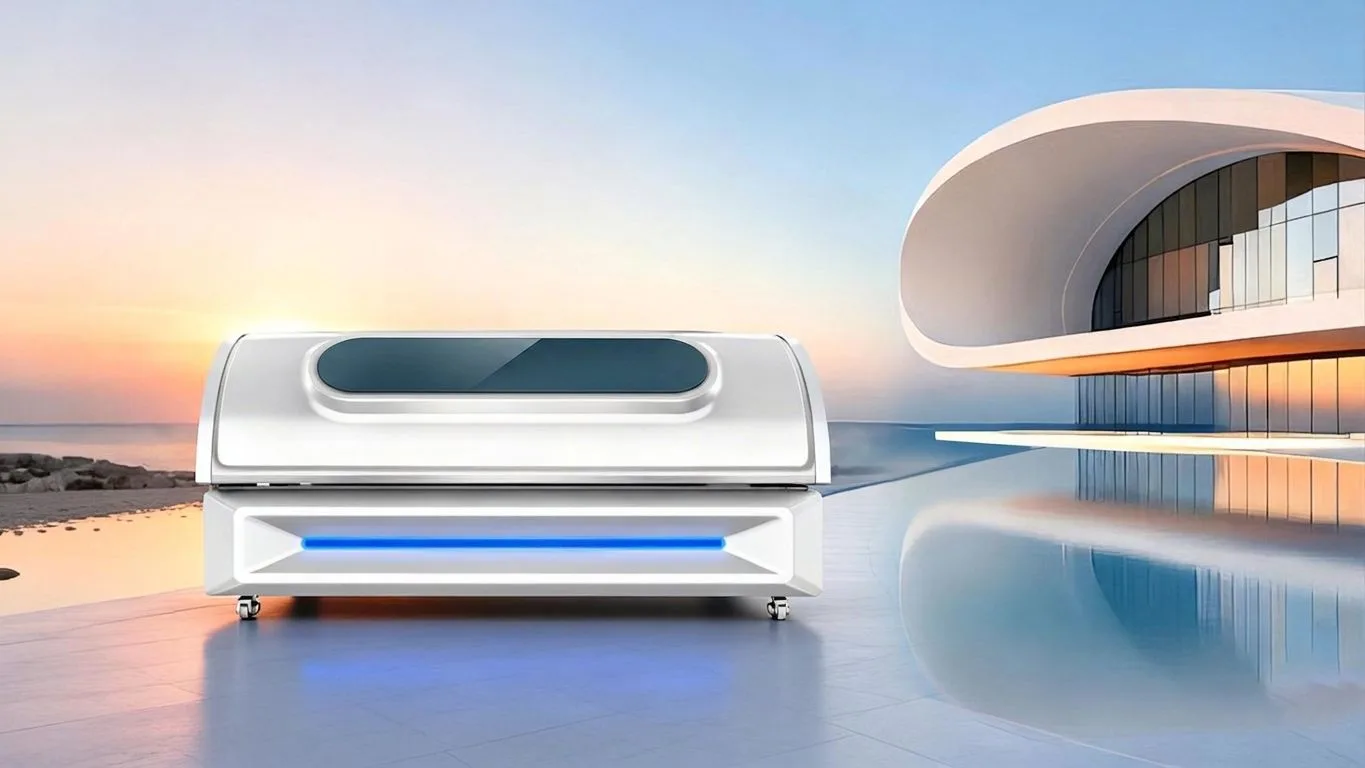
Red light therapy has moved from the biohacking fringe to the centre of the wellness floor for one commercial reason: it is a passive, high-throughput, high-margin session. A guest lies down, the array runs for ten to twenty minutes, and no therapist has to stay in the room. For a spa or clinic operator, that combination of genuine clinical backing and near-zero labour cost is rare. This guide covers what actually matters when you specify the hardware.
What red light therapy actually does
The clinical term is photobiomodulation (PBM). Red and near-infrared photons are absorbed by cytochrome-c oxidase in the mitochondria, which raises cellular ATP production and modulates nitric oxide and reactive oxygen species — the chain of events behind its anti-inflammatory and recovery effects (Hamblin, 2017). Two outcomes matter most to a paying guest. For skin, a randomised controlled trial found red and near-infrared light applied twice weekly improved complexion and skin roughness and increased ultrasound-measured intradermal collagen density (Wunsch & Matuschka, 2014). For performance and recovery, a meta-analysis of 12 randomised trials found phototherapy — especially applied before exercise — improved muscle performance and post-exercise recovery markers (Borsa et al., 2013). Those two claims — better skin, faster recovery — are the whole retail proposition.
Wavelength and dose, without the mysticism
Two bands carry the evidence: red at roughly 630–660 nm, which is absorbed superficially and drives skin and collagen outcomes, and near-infrared at 810–850 nm, which penetrates deeper for muscle, joint and recovery work. Serious full-body devices run both. Our flagship M6 LED bed, for example, combines 660 nm red with 850 nm near-infrared across an array that scales into the tens of thousands of EPISTAR LEDs, with independent control of each wavelength and adjustable pulse frequency.
Dose is where operators get sloppy. Irradiance (mW/cm²) multiplied by time gives the delivered dose in joules per square centimetre, and more is not always better. As a practical reference point, a professional bed of this class delivers on the order of 120 mW/cm² and a total dose around 60 J/cm² over a ten-minute session — which is why ten to twenty minutes is the standard treatment window rather than an hour under the lights. Panels follow the same logic at lower total output: a full-body standing panel typically calls for 15 minutes for skin work, two to three times a week, and around 20 minutes for pain and recovery, spaced at least a day apart.
Beds, panels or combination capsules?
The right form factor follows your floor, not the other way round. A full-body LED bed is the throughput workhorse: 360-degree exposure, homogeneous coverage, wireless control from the front desk, and a session that runs unattended. A vertical or tabletop panel suits a smaller footprint or a targeted treatment room, and is the natural entry point for a beauty clinic adding light to existing facials. For operators who want light bundled with other modalities, combination devices earn their place: a walk-in red-light cabin for standing full-body sessions, or the Red Couch Oxy, which layers 660 nm red and near-infrared light with gentle heat, purified low-oxygen air and an LED face mask into a single reclined experience — the kind of signature treatment that justifies a premium ticket.
Specifying hardware you won't regret
Three details separate a device that performs from one that photographs well and fails quietly. First, cooling: high-density LED arrays generate real heat, so look for engineered air circulation and quality acrylic optics rather than a sealed box that throttles output as it warms. Second, control: independent wavelength selection, adjustable pulse and multi-unit management from a tablet let one operator run a bank of beds. Third, coverage and irradiance honesty — ask for published irradiance at a stated distance, because a big LED count means little if the light is scattered or the panel runs cool. A device chosen on those three axes will still be delivering its rated dose in year five.
Where it fits — and what it pays
Red light is the modality that quietly balances a recovery floor's economics. Cold and heat sell the drama; light sells the recurring, unattended session that carries a strong margin because staff time per head is minimal. It slots naturally beside cold and heat in a full circuit, extends the treatment menu of a hotel spa, and pairs obviously with facials and body work. When you build the business case, keep the evidence to hand — our studies library collects the PBM trials your marketing and your guests will ask about — and specify the room as part of a coordinated fit-out through turnkey design-build so power, ventilation and layout are handled once, by one team.
Frequently asked
How long is a red light session?
Ten to twenty minutes on a full-body bed at professional irradiance. Standing panels run around 15 minutes for skin and 20 minutes for pain and recovery. Longer is not better once the target dose is reached.
Which wavelengths should the device have?
Both bands: red around 630–660 nm for skin and collagen, and near-infrared at 810–850 nm for deeper muscle and joint work. The best beds run them together with independent control of each.
How often can guests use it?
Two to three sessions a week is the typical cadence, with at least a day between sessions on the same area. That frequency is exactly what turns a membership into recurring revenue.
Is it labour-intensive to operate?
No — that is the point. Once a guest is positioned, a full-body bed runs unattended on a timer, so labour cost per session is minimal and the margin is among the highest on the floor.